


News
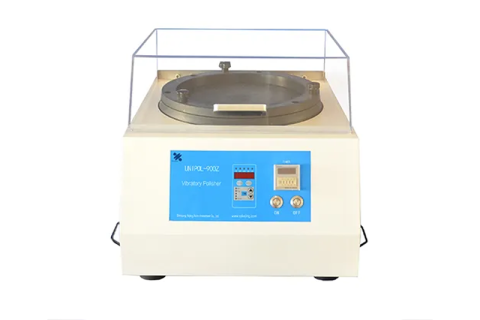
Before formally starting this article, let us first give a brief introduction to what a Polishing machine is. Simply put, a Polishing machine is a piece of equipment used to polish and restore the surfaces of objects. It is equipped with a high-speed rotating polishing disc and is convenient and efficient to use. However, due to its high-speed operating principle, there are certain safety risks during operation. Therefore, personnel who operate this equipment must strictly follow the safety specifications below to ensure safe operation.
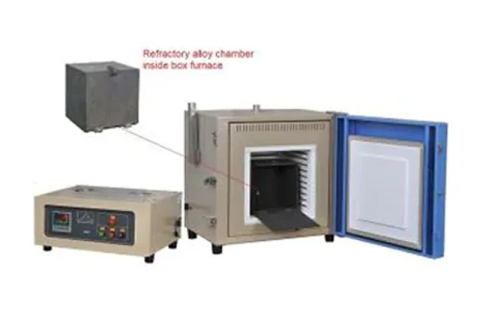
A Box Furnace is widely used in scientific research, industrial heating, and material processing. It is known for its excellent temperature uniformity, stability, reliability, and ease of operation, making it an important tool across many industries. In this article, I will provide a detailed guide on how to properly use a Box Furnace, hoping it will be helpful to you.
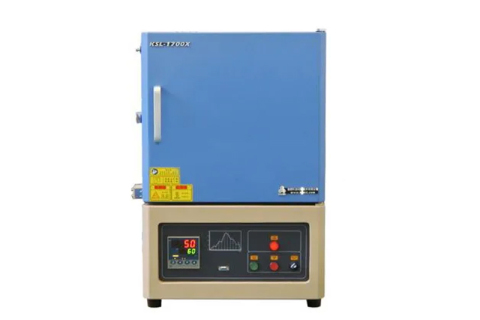
An box furnace is a heating device commonly used in laboratories and industrial fields, mainly for high-temperature treatment of experimental materials. Because the operation of an electric box furnace involves high temperatures, electricity, and mechanical components, certain risks exist during use. In this article, we will thoroughly analyze the potential risks associated with operating an electric box furnace and propose corresponding risk-mitigation measures.
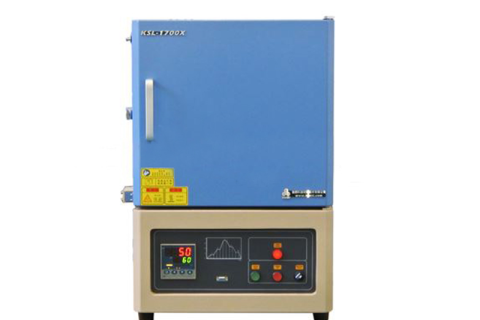
A laboratory box furnace is primarily used for high temperature sintering, metal annealing, quality inspection, and similar applications in universities, research institutes, and industrial enterprises. Its core principle involves generating heat by passing an electric current through heating elements, creating a uniform high temperature environment within an enclosed chamber lined with refractory materials, thereby meeting various heat treatment needs.
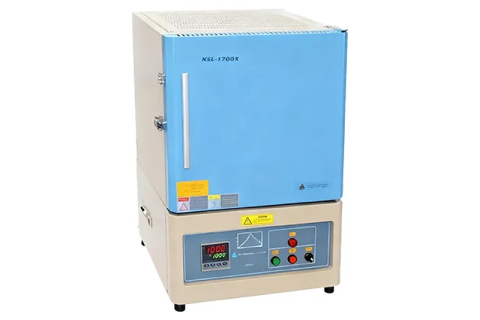
A muffle furnace, also known as a box furnace or vacuum furnace, is a heating device designed to operate under high temperature and high purity atmospheric conditions. It is commonly used in laboratory environments for sample pre treatment, elemental analysis, and experiments involving special materials. This type of furnace is characterized by precise temperature control, adjustable atmosphere, simple operation, and safe use, making it widely applicable in fields such as materials science, chemistry, and electronics. As a high temperature heating instrument, muffle furnaces can typically reach temperatures of 1000℃ or even 1300℃. Our compact lab muffle furnace, however, can achieve temperatures up to 1750℃, meeting the experimental needs of high melting point and high stability materials, and providing critical technical support for materials research and sample processing.
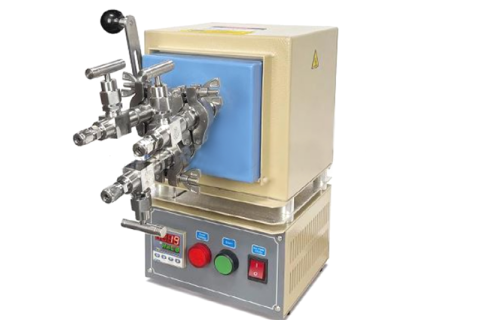
A lab high temperature sintering furnace is a versatile, multifunctional industrial heating device that combines the advantages of open chamber batch processing from box furnaces with the atmosphere controlled, sealed tube capabilities of tube furnaces. It integrates a sealed tube chamber inside the furnace or connects external tube components to the main box type chamber.
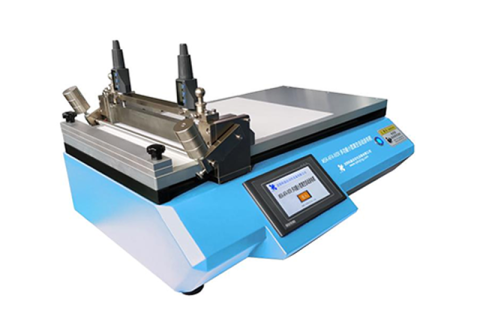
Imagine stepping into a bustling lab where every second counts, and precision isn't just a goal—it's the lifeline of groundbreaking discoveries. Enter the Multifunctional Small Vacuum Automatic Coating Machine: a compact powerhouse that packs advanced vacuum technology into a space-saving design tailored for modern labs. This isn't your grandfather's coating setup; it's a smart, automated solution that delivers flawless thin films for everything from battery electrodes to optical lenses. Whether you're scaling up prototypes or fine-tuning experiments, this lab vacuum coating equipment promises to elevate your results. Let's dive in and explore why this machine deserves a spot on your bench.
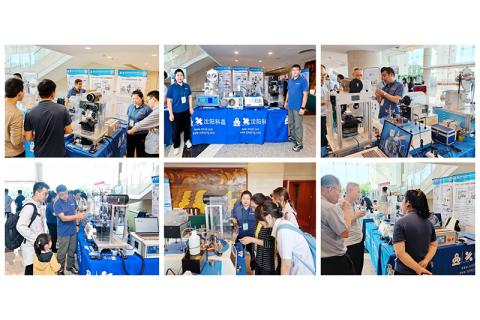
From November 7th to 9th, 2025, the 5th Youth Academic Conference on Artificial Crystal Materials was held in Fuzhou, Fujian Province. The conference, themed "Frontier Exploration and Innovative Applications," focused on basic research, key technological breakthroughs, and industrial applications of artificial crystal materials. It attracted over 500 young scholars and experts from more than 100 universities and research institutes across China, including Tsinghua University, Peking University, institutes of the Chinese Academy of Sciences, University of Electronic Science and Technology of China, and Shandong University, as well as leading enterprises in the industry, to gather together and jointly outline a new blueprint for the future development of artificial crystal materials.

Mastering the standardized operation of the gas atmosphere control and valve operation of the three zone high temperature tube furnace is very important to ensure the safety of the equipment and the reliability of the experiment. In this article, I will combine the characteristics of the equipment to introduce you to the main precautions.
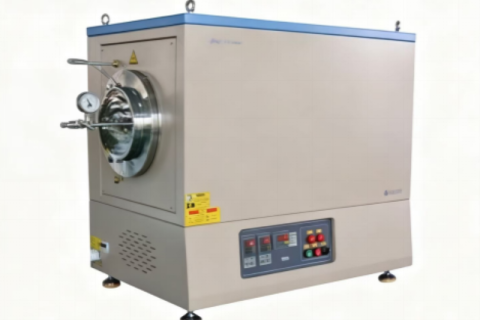
Working principle of dual heating zone tube furnace is not simple power-on heating, but through the coordination of heating system, temperature control system, atmosphere control system and structural adaptation design, the whole process management from temperature control to environmental protection is realized, and it provides a reliable high temperature environment for experiments and production.