


News
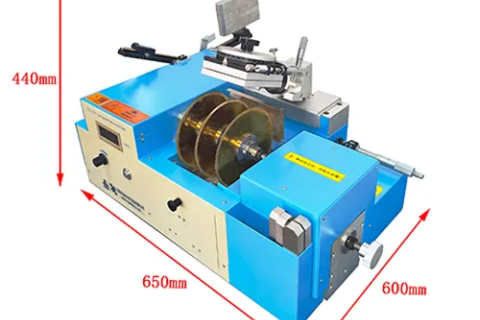
The Ultimate Guide to multi-blade low-speed diamond cutting machines for High-Precision Materials Analysis: In the realm of materials science, the integrity of a sample is paramount. Whether you are conducting SEM (Scanning Electron Microscopy) analysis, examining crystal lattice structures, or performing metallographic tests, the first step—cutting—can make or break your research. Enter the Multi-Blade Diamond Cutting Machine, specifically the SYJ-190. This precision instrument is designed to provide clean, deformation-free sections across a vast array of materials.

In the modern fields of scientific research, healthcare, and industrial manufacturing, efficiently cleaning components with complex geometries—including those featuring blind holes or intricate textures—without causing damage has long been a challenge for technical professionals. Ultrasonic cleaning technology, specifically its "cavitation effect," has emerged as the preferred solution for addressing this issue.

From March 18th to 20th, 2026, the global photonics community gathered at the Shanghai New International Expo Center for the LASER WORLD OF PHOTONICS SHANGHAI 2026. As one of the most influential trade fairs for the optical industry in Asia, the event spanned over 100,000 square meters, bringing together the entire supply chain—from laboratory research to industrial manufacturing.
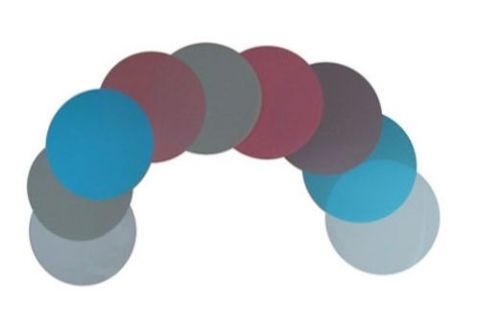
In fields like fiber optics, optical manufacturing, and semiconductor processing, achieving high-precision surface finishes on hard, brittle materials has always been a challenge. Diamond lapping film has emerged as a go-to solution for this task. It's made by evenly distributing micron or even nano-sized diamond particles across a high-strength film surface using precision coating technology—perfect for grinding and polishing materials like glass, crystals, and ceramics.

In materials research and industrial testing, getting a metallographic sample ready isn't just a chore—it's the make-or-break step before any real observation. And when it comes to that final polish, red velvet polishing cloth is a workhorse. It doesn't carry any abrasive on its own. Instead, its dense velvet pile does three essential jobs: holding onto polishing fluid, cushioning the sample, and sweeping debris away.
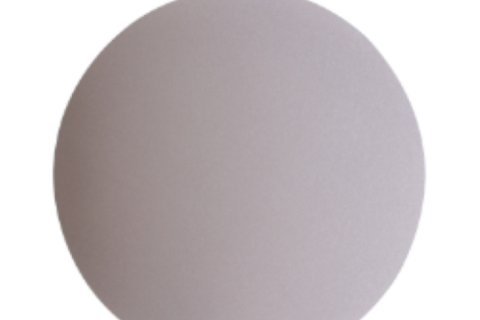
Gray velvet polishing cloth is a metallographic consumable made for final-stage precision polishing. Its working surface uses high-quality short fibers—dense, uniform, and with just the right amount of flexibility and absorbency. This product is suitable for the final polishing of high-precision samples—such as hard metals, cemented carbides, and carbon-based materials—and is capable of removing fine scratches while simultaneously reducing the risk of inclusion pull-out.

Shenyang Kejing has just released four major pieces of laboratory equipment: an Integrated Crystal Orientation and Cutting System, a Dual-Station Automatic Pressure Grinding and Polishing Machine, a Vacuum Spin Coater, and an Electrolytic Polisher. These systems comprehensively enhance the efficiency and precision of materials preparation, designed specifically for R&D applications in universities, research institutes, and high-tech enterprises. Discover the latest product details and their core advantages below.

Black Semiconductor Polishing Pads is a specialized consumable designed for precision polishing of hard and brittle materials.

Black Semiconductor Wool Polishing Pad is a specialized consumable designed for fine polishing processes, suitable for the final polishing of materials such as crystals and ferrous metals.
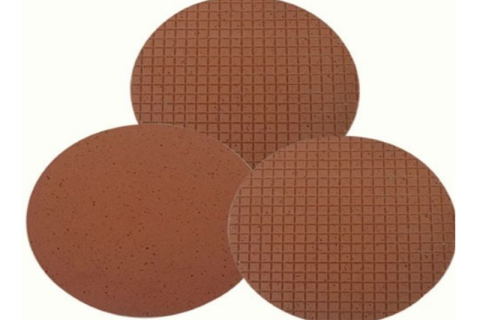
Polyurethane (PU) Polishing Pad for Wafer Surface is a specialized consumable designed for high-efficiency rough polishing of hard and brittle materials.