


Applications of small tube furnaces in gloveboxes
2026-07-13 17:27Laboratory equipment selection is often driven by a need for maximum performance; however, many routine experiments do not require large reaction chambers, extensive heating zones, or high power loads. Researchers may simply need to heat a few milligrams of catalyst, a short length of wire, a micro-boat filled with powder, a small substrate, or a sensor component. In such cases, small furnaces offer easier installation, faster integration, and lower operating costs compared to traditional, large-scale systems.
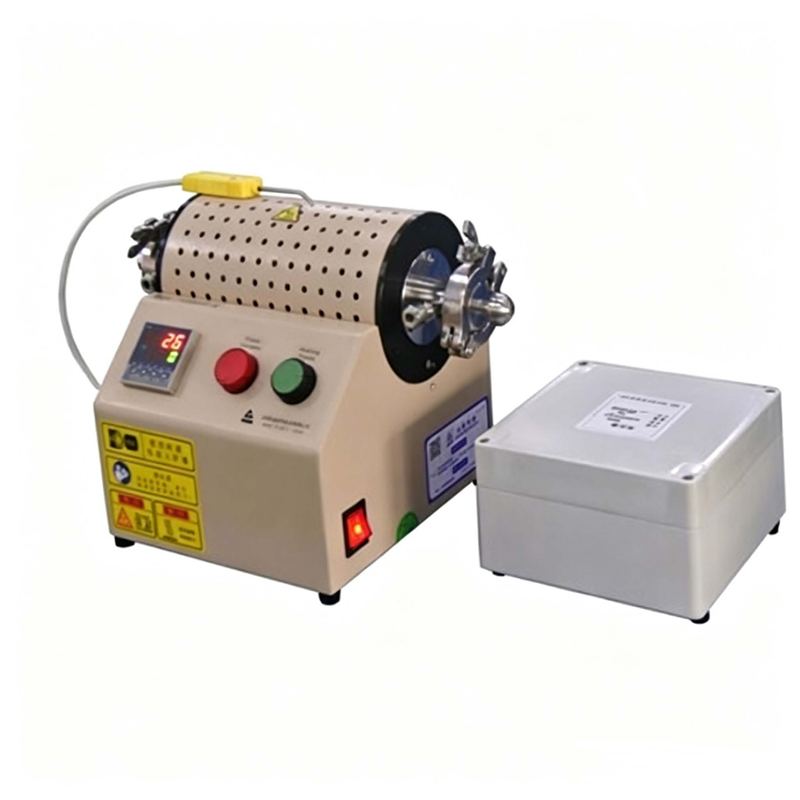
The GSL-1000X-S is a compact, high temperature electric furnace designed specifically for the short-duration heat treatment of small samples. It offers a maximum temperature of 1000°C, with a recommended continuous operating temperature of 900°C. Its compact split-tube design, 20 mm quartz tube, programmable PID controller, optional vacuum capability, and flexible horizontal or vertical mounting options make it ideal for universities, research institutes, industrial laboratories, and R&D teams working with limited sample volumes.
Why small-sample research requires a different type of furnace
Standard laboratory tube furnaces typically feature tubes with diameters of 50 mm or larger and heating zones spanning hundreds of millimeters. While this size is sufficient for general experiments, it can be excessive for screening experiments, micro-reactors, glovebox operations, or repetitive testing of small samples. Larger furnaces consume more bench space and electricity, and require longer times for heating and cooling.
Micro-scale systems align the heating zone more closely with the scale of the experiment itself. A 55 mm heating zone and a 20 mm constant-temperature zone are designed specifically for precisely positioned small samples. The furnace utilizes a high-purity quartz tube with an outer diameter of 20 mm, an inner diameter of 17 mm, and a length of 192 mm. This geometry is well-suited for micro-boats, wires, thin rods, powder packets, short substrates, and small-scale gas reaction setups.
Its primary limitations are also evident: this furnace is not suitable for large batches or long samples. Successful operation depends on placing the active sample within the constant-temperature zone and ensuring that the sample holder, thermocouple, gas pathways, and connections all fit within the narrow tube.
Practical application scenarios for high temperature electric furnaces:
Integration with gloveboxes for air-sensitive materials:
With appropriate electrical modifications, this small tube furnace can be installed inside a glovebox. This allows for sample loading, heating, cooling, and retrieval to be performed without exiting the protected environment. Due to its compact size, the furnace occupies less of the glovebox's limited internal space compared to conventional furnaces.
Integrating the furnace into a glovebox involves more than simply placing the unit inside. Factors such as electrical feedthroughs, transformer placement, heat dissipation, internal gas circulation, external cooling, emergency shutdown protocols, and the glovebox's oxygen removal capacity require careful evaluation. The standard configuration includes a 220V-to-22V transformer; the final electrical design should be confirmed with both the supplier and the glovebox manufacturer (Shenyang Kejing).
Heat released within the glovebox raises the internal temperature and increases the load on the purification system. Consequently, users must determine the glovebox's maximum operating duration and cooling cycles, as well as maintain safe clearances from gloves, windows, filters, sensors, and polymer components. While the low-power 500W design facilitates compact integration, a formal risk assessment is still required.