


How Large Diameter Tube Furnaces Support Scaled-Up Research and High-Temperature Materials Processing
2026-07-14 17:33Scaling up heat treatment processes from small laboratory samples to larger research batches is rarely as simple as merely switching to a larger container. As sample volume increases, heat transfer uniformity decreases, gas exchange becomes harder to control, and the discrepancy between the programmed furnace temperature and the actual material temperature becomes more pronounced. Furthermore, researchers require sufficient internal space to accommodate wider quartz boats, larger ceramic components, wafer carriers, metal assemblies, and representative powder batches. It is precisely because of these challenges that large diameter tube furnaces are selected when conventional 50 mm or 80 mm models cannot meet processing capacity requirements.
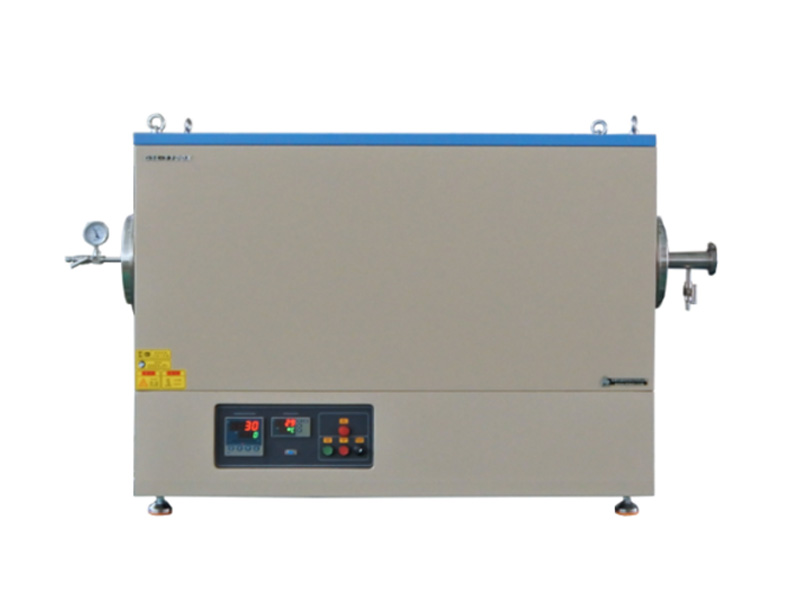
A large diameter tube furnace is not merely a scaled-up version of a standard furnace. Aspects such as tube diameter, heating zone configuration, insulation systems, vacuum connections, flange design, gas flow paths, temperature control strategies, and cooling requirements must all work in concert. When these factors are perfectly aligned with experimental needs, the furnace bridges the gap between small-sample research and pilot-scale validation, all while maintaining the controlled environment essential for tube furnace processing.
Why Is Tube Diameter Crucial in Advanced Thermal Research?
In many laboratories, the initial furnace used for new materials is often compact, as early-stage experiments require only a few grams of powder, a small specimen, or a narrow substrate. Once a process shows promise, research teams often face a new question: can the same results be replicated with larger batches or larger components? At this stage, the furnace's internal volume becomes a practical limiting factor.
A wider tube diameter allows researchers to use larger quartz or alumina boats, process multiple samples in a single run, handle wide substrates, and test geometries that would not fit in standard-diameter tubes. It also provides more space for fixtures, thermocouples, sample holders, and gas distribution assemblies. For wafer-related work, a sufficient diameter is critical, as both the wafer carrier and the necessary clearances must fit within the process tube.
Available tube diameters include 6-inch, 8.5-inch, and 11-inch options, each corresponding to a different working space.
The 6-inch diameter is suitable for many medium-sized batches and large laboratory samples.
An 8.5-inch tube diameter offers expanded space for wider boat-style containers, larger ceramic bodies, and wafer-related experiments.
An 11-inch diameter is suitable for projects where sample size or pilot-scale production is the primary consideration.
When selecting these sizes, one should evaluate factors beyond just sample dimensions—such as maximum sample size, required clearance, gas flow paths, loading methods, and future scale-up plans.
Application 1: Sintering Large Ceramic Samples
High-purity alumina fiber chambers minimize heat loss, while coated liners enhance heating efficiency and extend service life. Alumina plugs at both ends of the tube reduce radiant heat loss and help maintain an effective heating zone. During process development, samples should be positioned away from the ends of the tube, where temperature fluctuations are typically more pronounced. Even if the furnace is capable of rapid ramp rates, large components may require slower heating and cooling rates compared to small test specimens.
Application 2: Wafer Annealing and Diffusion Research
For wafer processing, furnace selection must be coordinated with wafer boats, flanges, gas inlets, vacuum connections, and loading procedures. An 8.5-inch furnace, equipped with appropriate quartz accessories, can support wafer-related research; the usable wafer size depends on the specific fixture design. Researchers should also determine whether a single long uniform heating zone or multiple independently controlled zones best suit the process. Single-zone configurations are generally suitable for standard annealing, whereas dual- or triple-zone configurations facilitate a wider uniform heating zone or the creation of specific temperature profiles.
Why Partner with Shenyang Kejing?
Shenyang Kejing develops and supplies laboratory equipment for materials preparation and research. For large-tube projects, the company offers a wide range of configuration options, including choices for tube diameter, heating zones, vacuum pumps, flange connections, water cooling systems, quartz boats, and temperature measurement accessories. The furnace features programmable PID control; multi-zone models support independent zone control and come equipped with standard communication ports for computer connectivity.
The system is CE certified, with UL or CSA certification available as an optional upgrade for an additional fee. Standard lead time is approximately ten working days, subject to final configuration and order confirmation. We offer a one-year warranty and lifetime maintenance support; however, consumables such as heating elements, quartz tubes, and sample crucibles are not covered by the standard warranty.
Another advantage is our in-house laboratory, which allows for sample testing. Buyers can discuss their materials and processing objectives with us prior to purchase and—where appropriate—arrange trial runs to evaluate whether the selected configuration meets their requirements. This mitigates the risks associated with selecting a furnace based solely on nominal temperature and tube diameter.