


Tips for Better Sanding and Polishing Results
2026-02-13 16:56In metal, ceramic, composite materials, and laboratory sample preparation, sanding and polishing is a common and essential step. While the process may look simple, improper methods often lead to remaining scratches, uneven surfaces, low efficiency, or even sample damage. To achieve consistent and repeatable results, the choice of sanding paper, grit sequence, and operating technique all matter.
Choose grit sizes step by step.
One of the most important rules in sanding and polishing is moving from coarse to fine grit gradually. Coarser grits are used to remove machining marks or surface defects, while finer grits refine the surface and improve finish quality. If the grit jump is too large, deep scratches from the previous step can be difficult to remove later.
In practice, sanding often starts with 240# or 400# for initial material removal, then moves to 800# and 1200#, and finally to 1500# or finer grits depending on surface requirements. Grinding paper with uniform grit distribution and stable abrasive quality helps reduce rework and improves overall efficiency.
Control pressure and rotation speed during operation.
A common mistake is applying excessive pressure to speed up sanding. In reality, too much pressure can cause abrasive grains to wear out quickly and may lead to local overheating or surface deformation.
When used with grinding and polishing machines, better results come from steady rotation speed and even pressure. Our High efficiency grinding paper features firmly bonded abrasives and good wear resistance, allowing it to maintain stable grinding performance even during extended operation. This helps achieve more uniform material removal and better surface consistency.
Ensure proper adhesion to prevent lifting or shifting.
When using sanding paper on disc-type polishing machines, proper adhesion is critical. If the paper lifts or shifts during operation, it can affect surface quality and may even damage the sample or equipment.
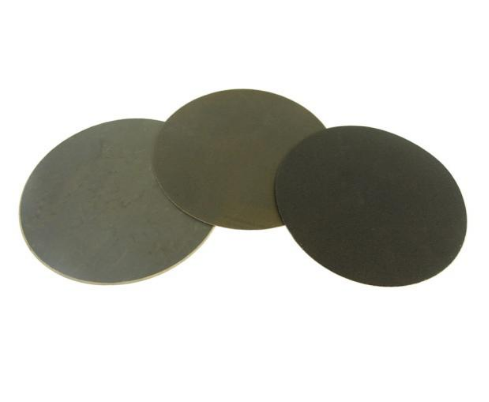
High efficiency grinding paper with adhesive backing can be cut into standard circular discs to match different machine sizes. It bonds securely to the backing pad and works with magnetic platens for stable attachment to the grinding plate. This setup improves operational stability and is especially suitable for laboratories and batch processing where repeatability is important.
Replace sanding paper at the right time.
Sanding paper should not be used until it is completely worn out. As abrasives become dull or clogged, continued use increases friction and heat without improving surface quality. A simple sign that replacement is needed is when grinding efficiency drops and the surface becomes shiny but material removal slows down.
Using high-strength, long-lasting abrasives helps maintain surface quality while reducing replacement frequency and overall consumable costs.
Match paper size to equipment and samples.
Different grinding and polishing machines require specific sanding paper diameters. Common disc sizes range from small laboratory formats to larger industrial sizes. Choosing the correct size ensures easier installation and more even force distribution during operation.
In precision grinding applications, proper matching between the equipment and sanding paper directly affects the stability and consistency of the final surface finish.
If you are looking for reliable consumables for precision grinding or sample preparation, feel free to contact us to learn more about our High efficiency grinding paper specifications and application options.