


How Wax-Free Polishing Discs Transform Laboratory Workflows
2026-06-26 17:30The Evolution of Polishing Processes
In materials science, semiconductor failure analysis, and metallographic inspection, the surface planarity and cleanliness of samples are critical factors determining the quality of microscopic imaging. For decades, researchers have relied on mounting wax to secure small or irregularly shaped samples. However, as the resolution of electron microscopes (SEM/TEM) has improved, the drawbacks associated with traditional wax-mounting techniques have become increasingly problematic.
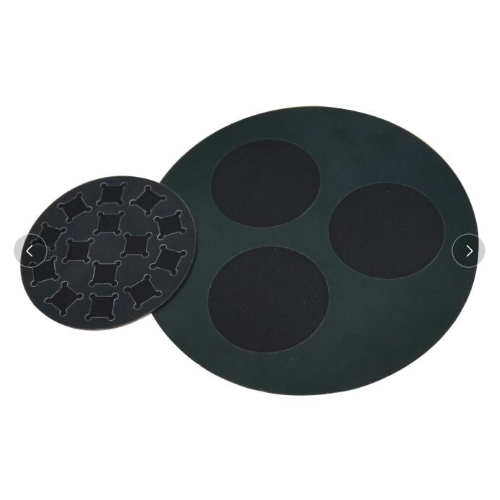
Wax-free polishing discs produced by Shykejing Laboratory represent a significant leap forward, shifting the method from "chemical bonding" to "mechanical/self-adhering fixation."
Three Major Pain Points of Traditional Polishing Processes
A. Cross-Contamination and SEM Imaging Interference (The Contamination Crisis)
Paraffin wax is a hydrocarbon. During polishing, trace amounts of wax can seep into the material's micro-cracks or pores. During Scanning Electron Microscopy (SEM) or Energy Dispersive X-ray Spectroscopy (EDS) analysis, the high-energy electron beam causes residual wax to volatilize, resulting in carbon contamination. This obscures the sample's true composition and can even contaminate extremely expensive electron microscope lenses.
B. Tedious Heating and Cleaning (The Time Sink)
The traditional wax-mounting process involves: heating the mounting stage -> applying wax -> placing the sample -> cooling to solidify. After polishing, a lengthy soaking and cleaning process using toxic organic solvents (such as acetone or xylene) is required. This not only extends the sample preparation cycle but also places a burden on laboratory personnel regarding chemical safety and protection.
C. Planarity Errors and "Edge Rounding" (The Planarity Problem)
Manual wax application makes it difficult to ensure the wax layer is perfectly level. Even a slight tilt can result in an uneven polished surface. Furthermore, the wax layer often lacks sufficient support at the edges, easily leading to the "edge rounding" effect—a critical issue for experiments analyzing coating thickness or surface diffusion layers.
Working Principle (How It Works)
Wax-free polishing discs feature a multi-layer composite structure, centered on a unique microporous adsorption layer or a high-friction polymer coating.
Physical Adsorption Technology: Utilizing surface tension and vacuum adsorption principles, the sample adheres tightly to the polishing disc in a wet state. No heating is required; simple mechanical pressure is sufficient for fixation.
High-Flatness Backing Plate: A high-hardness, corrosion-resistant base material ensures no deformation occurs under polishing pressure.
Self-Adhesive & Quick-Change System: The back of the disc typically features a magnetic or low-tack adhesive layer, allowing for the rapid swapping of discs with different grit sizes within seconds.
Industry Applications (Advanced Applications)
A. Compound Semiconductors (SiC, GaN)
Silicon Carbide (SiC) and Gallium Nitride (GaN) are extremely hard, requiring long polishing cycles. Wax-free polishing discs withstand prolonged high-pressure grinding without chemical reactions, preserving the integrity of the epitaxial layer.
B. Soft and Brittle Materials
Examples include single-crystal silicon and optical crystals. These materials are highly sensitive to heat; the thermal shock associated with waxing can cause micro-cracks. The wax-free process operates at room temperature, maximizing the preservation of the material's physical structure.
C. Metallographic Failure Analysis
Rapid sample preparation is crucial when analyzing aerospace component failures. Wax-free discs reduce preparation time from hours to minutes, enabling engineers to quickly identify fatigue cracks or oxidation layer issues.
Operational Guidelines: Optimizing Polishing Results (Best Practices)
Surface Pre-treatment: Ensure the back of the sample is flat and free of oil or contaminants.
Proper Wetting: Before placing the sample, apply a small amount of deionized water or specialized polishing fluid to the center of the disc; hydrostatic pressure enhances adhesion.
Pressure Control: A staged pressure method is recommended—apply lower initial pressure to expel air, then increase pressure for rapid grinding.
Cleaning and Maintenance: Clean the disc surface ultrasonically after each use to prevent abrasive residue buildup. Wax-free polishing discs for laboratories represent not merely an update to the tools used, but a significant upgrade in standardized laboratory operations. They resolve three core challenges: carbon contamination, low efficiency, and precision deviations. For research institutions striving for accurate data, abandoning paraffin in favor of wax-free polishing is an essential step toward achieving high-precision sample preparation.