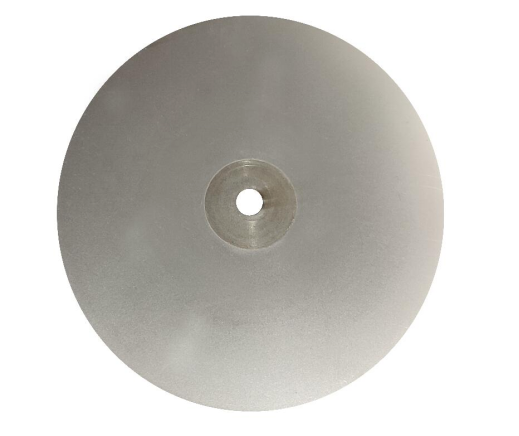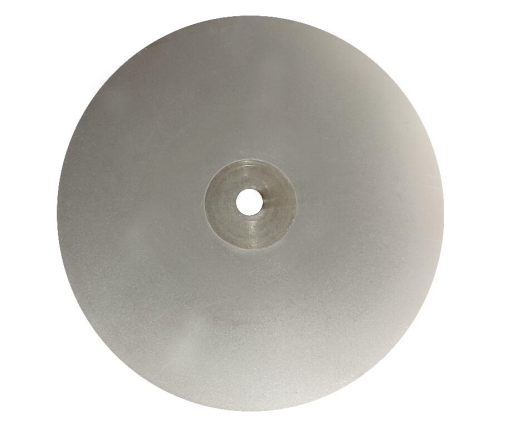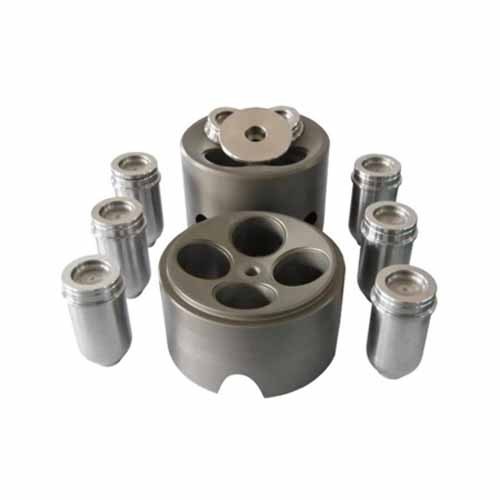


Stainless steel body
A robust metallic jar body suited to repeated laboratory handling. Material compatibility should still be checked for corrosive, reactive or contamination-sensitive samples.
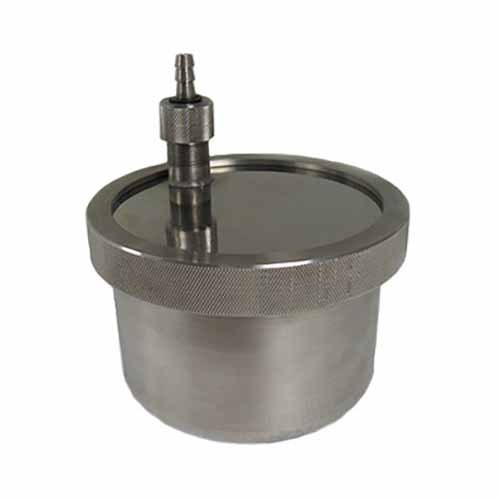
1. A compact laboratory milling jar for material mixing and ball milling under a controlled vacuum environment.
2. Its stainless steel construction, removable lid and top connection support practical sample preparation for research and small-batch process development.
3. Vacuum ball milling jars are designed specifically for laboratory use; in addition to small grinding jars, we also manufacture large-scale grinding mills to suit your various experimental needs.
The 250 mL stainless steel vacuum ball mill jar is intended for researchers who need to mix, homogenize or mechanically mill small material batches while limiting direct exposure to the surrounding atmosphere. The top connection provides an interface for establishing the required process environment. Because actual performance depends on the paired mill, sealing components, media, sample and operating method, these items should be reviewed together before use.
A robust metallic jar body suited to repeated laboratory handling. Material compatibility should still be checked for corrosive, reactive or contamination-sensitive samples.
The nominal 250 mL volume supports small-batch experiments, formulation screening and process development without requiring a production-scale charge.
The lid assembly incorporates a top connection for a vacuum line or compatible fitting. Required vacuum level and connection hardware must be confirmed for each setup.
The jar may be considered for dry mixing or wet milling. Wet operation requires the specified O-ring and a seal material compatible with the chosen liquid.
The screw-style jar and lid arrangement provides access for loading media and samples, unloading processed material, inspection and cleaning.
Suitable integration depends on jar geometry, loaded mass, mill fixture, speed range and available clearance. Share the mill model for a compatibility review.
| Product name | Stainless Steel Vacuum Ball Mill Jar |
|---|---|
| Reference SKU | SS-VBMJ-250 |
| Nominal capacity | 250 mL |
| Jar material | Stainless steel |
| Technical Specifications | 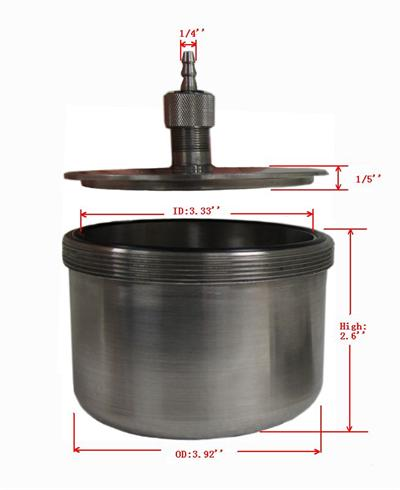 |
| Processing methods | Material mixing and ball milling; dry or wet method subject to application review |
| Wet-milling seal | O-ring required: 104 mm outer diameter × 90 mm inner diameter |
| Included items | Confirm jar, lid, fitting, O-ring and other accessories in the formal quotation |
Blending research powders and additives where uniform distribution is required before pressing, sintering or further testing.
Laboratory particle-size reduction and mechanical treatment, subject to the mill type, media, speed and material hardness.
Screening small batches during ceramic, battery-material, metal-powder, mineral or other materials research.
Application examples are general categories, not a guarantee of suitability. Verify chemical compatibility, contamination tolerance and operating limits before processing.
Compare the jar diameter, height, fitting clearance and loaded mass with the usable space and fixture of the ball mill.
Check whether stainless steel and the selected grinding media are acceptable for sample chemistry and contamination limits.
For wet milling, use the specified O-ring dimensions and confirm the elastomer is compatible with the process liquid.
Obtain written confirmation for vacuum level, speed, duration and charge before beginning a new process.
A vacuum ball mill jar is not automatically suitable for positive pressure, gas generation, hazardous reactions or uncontrolled temperature rise. Do not exceed confirmed operating limits. Inspect the jar, threads, fitting and seal before every run, and follow the ball mill manufacturer's guarding and operating instructions.
Clean and dry the jar after each use.
Use a cleaning method compatible with the sample and seal.
Inspect threads and sealing surfaces for residue or damage.
Replace worn, swollen, cut or hardened O-rings.
Avoid tools that may scratch the sealing surface.
Store the jar open and dry when not in use.
It is intended for laboratory-scale material mixing and ball milling when a controlled vacuum environment is needed. Final suitability depends on the material, milling media and compatible mill.
Specify the required media material, diameter and quantity when requesting a quotation.
No. Confirm jar dimensions, fixture or roller arrangement, allowable loaded mass, speed and clearance. Providing your equipment model helps the technical team review compatibility.
The achievable level also depends on the pump, tubing, fittings, seal condition and complete system. Request a confirmed specification for your setup.
Provide the mill model, sample material, dry or wet method, preferred milling media, required quantity, seal or fitting requirements and delivery destination.
Send your mill model and process details. Shenyang Kejing Automation Equipment Co., Ltd. can review compatibility, clarify the supply scope and prepare an application-based quotation.