

Stainless Steel Milling Balls
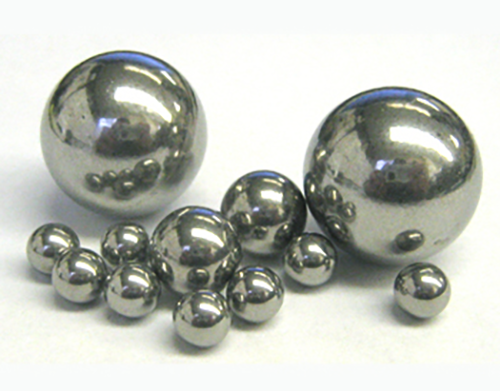
1. The 304 stainless steel milling balls is suitable for planetary mixers, with sizes of Ø6mm, Ø10.mm, and Ø19.5mm.
It is recommended to use it with a mixer. If you have other customization needs, please contact our sales team for one-to-one service.
2. Own factory, precise dimensions and high quality.
- Shenyang Kejing
- Shenyang, China
- 22 working days
- 50 sets
- Information
Reliable Grinding Media for Laboratories That Need Efficient Mechanical Milling
Laboratory milling often looks simple from the outside: place a sample in a jar, add grinding media, set the machine, and begin. In practice, the quality of the grinding media has a direct influence on impact energy, mixing behavior, process stability, cleaning effort, and the consistency of each milling cycle. Balls that are incorrectly sized, poorly matched to the jar, or selected without considering the sample can slow the process and make the final result harder to reproduce.
These stainless steel grinding balls are designed for mixing and ball milling with the SFM-1 planetary mixer. Available diameters include 6 mm, 10 mm, and 19.5 mm, giving laboratories several practical options for building a media-size combination suited to their material, filling level, and milling objective. According to the supplied product data, the grinding process can reach a particle size below 1 µm when the complete milling system and operating conditions are appropriately configured.
For research teams, production laboratories, universities, and material-development departments, stainless steel milling balls provide a familiar and practical grinding-media option. Their metallic construction makes them suitable for applications where robust impact and repeated mechanical contact are required. They can be used for routine sample preparation, powder mixing, mechanical size reduction, and exploratory milling trials, subject to compatibility between the stainless steel media and the processed material.
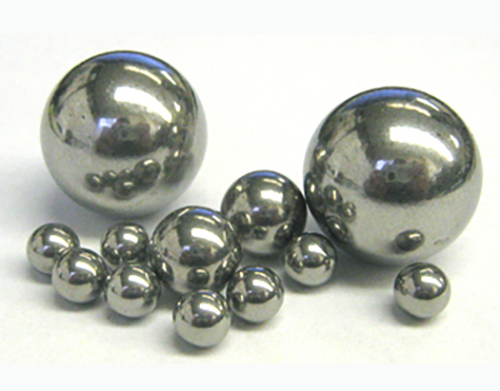
Technical Parameters of stainless steel ball mill balls
| Product Model | Stainless Steel Grinding Balls |
| Technical Parameters of planetary ball mill balls | 1. Material: Stainless Steel 2. Specifications: Ø6mm, Ø10mm, Ø19.5mm 3. Grinding Particle Size: <1µm |
Key Advantages of stainless steel ball mill balls
Multiple Ball Diameters for Flexible Media Selection
The supplied sizes—6 mm, 10 mm, and 19.5 mm—allow users to select a single diameter or consider a mixed-size media charge. Smaller balls can increase the number of contact points within the jar, while larger balls can deliver stronger individual impacts. The most suitable arrangement depends on the material, starting particle size, jar volume, machine settings, and desired final condition. Providing several diameters helps laboratories build a process around actual requirements rather than relying on one universal media size.
Designed for Mixing and Ball-Milling Work
The product is intended for both mixing and ball milling in the SFM-1 planetary mixer. This dual-purpose use is valuable when a laboratory needs to blend powders before further processing or combine mixing and particle-size reduction in one mechanical preparation route. Users should still determine whether the selected speed, time, direction sequence, and filling ratio are appropriate for their sample.
Stainless Steel Construction
Stainless steel is widely selected as grinding media where users value mechanical durability, repeated use, and straightforward handling. The smooth metallic surface also supports routine cleaning procedures. However, every laboratory should consider potential metal transfer and chemical compatibility before processing sensitive materials. Where metallic contamination is unacceptable, an agate or alumina system may be more appropriate.
Potential for Fine Particle Preparation
The milling particle size can reach below 1 µm. This should be understood as a process capability under suitable conditions rather than a guaranteed result for every sample. Final particle size depends on material hardness, brittleness, starting size, media-to-powder ratio, jar selection, milling time, rotation program, wet or dry conditions, and temperature behavior.
How to Select the Right Grinding Ball Size
Ball size influences the balance between impact force and contact frequency. A laboratory processing relatively coarse feed may begin by evaluating larger balls because they can produce stronger impacts. A finer starting powder or a later-stage refinement process may benefit from smaller balls because more pieces of media create more contact points. In many milling programs, users test more than one size or combine sizes to improve packing and energy transfer.
The 6 mm balls can be considered for fine grinding, intensive mixing, or process stages where a high number of contact events is useful. The 10 mm size is a practical middle option for general laboratory work. The 19.5 mm balls provide a larger individual mass and may be considered when stronger impact is required. These are general selection principles only; they should be verified through controlled tests using the actual material and jar.
Do not choose ball diameter in isolation. Check the jar’s internal dimensions, allowable loading, lid design, and the operating limits of the planetary mixer. The media charge must have enough free movement to generate impact and shear. Overfilling can reduce movement, increase heat, and decrease grinding efficiency. Underfilling may reduce throughput and produce an unstable load.
Why Work with Shenyang Kejing for Laboratory Milling Accessories?
Selecting a milling accessory is not only a question of buying a jar or a set of balls. The accessory has to fit the machine, match the process, support the planned sample quantity, and work within the laboratory’s operating procedure. Shenyang Kejing Auto-instrument Co., Ltd. supports customers through a broader laboratory equipment and process-service framework rather than treating each accessory as an isolated commodity.
Product Experience and Selection Support
Customers can discuss the intended machine, sample type, target particle size, milling method, batch size, and cleaning requirements before ordering. This helps reduce uncertainty when choosing among stainless steel, agate, alumina, and other milling media or jar materials.
Process Support and Training
The company’s open-laboratory service concept includes process support and training. This is useful for laboratories that are introducing planetary milling, refining a preparation procedure, or establishing a more repeatable sample-processing workflow.
Material Processing and Testing
Support for material processing and testing can help customers evaluate whether a selected accessory and milling route are appropriate for the required preparation task before expanding routine use.