


An In-Depth Analysis of Shenyang Kejing's 1700℃ 125L High Temperature Box Furnace
2026-02-06 14:13In today's rapidly developing field of materials science, traditional desktop box furnaces are often limited by their chamber volume, making it difficult to meet the sintering needs of large workpieces or the batch heat treatment requirements of small samples.
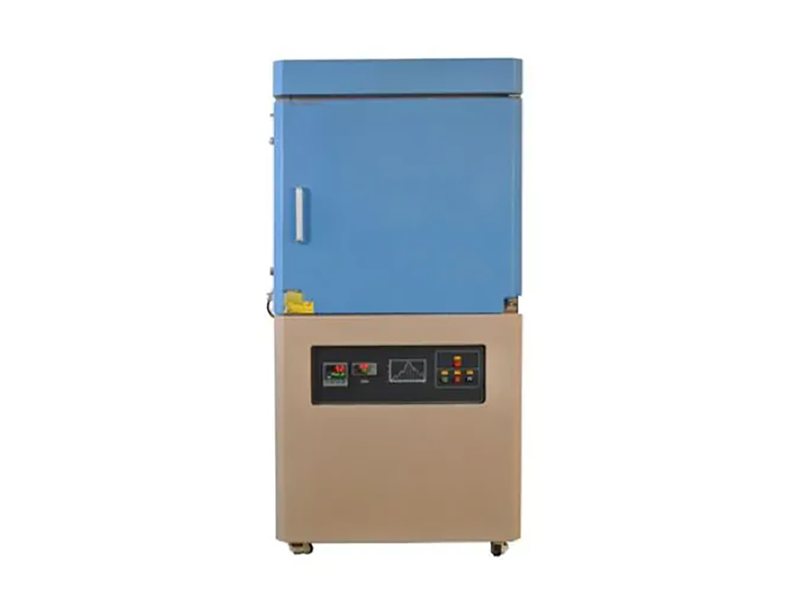
This High Temperature Box Furnace, with its ultra-large 125L capacity and a maximum temperature of 1700℃, is an industrial-grade laboratory furnace that is becoming a powerful tool for numerous university laboratories, research institutes, and industrial enterprises in overcoming the challenges of high-temperature material preparation.
When "High Temperature" Meets "Large Capacity": Why Do You Need the KSL-1700X-A5 High Temperature Box Furnace?
In the field of high-temperature heat treatment, temperature and uniformity are often contradictory. Generally, the smaller the furnace chamber, the easier it is to control the thermal field and the better the temperature uniformity. However, real-world research and production needs often defy conventional wisdom.
The Extreme Challenge of 1700℃.
There are many large-capacity furnaces on the market, but very few can stably reach 1700℃. Most industrial ovens stop at 1200℃. The KSL-1700X-A5 is specifically designed for extreme high temperatures:
Continuous working temperature: 1600℃.
Short-term maximum temperature: 1700℃ (<0.5 hours).
This temperature range covers the sintering needs of most advanced ceramics (such as alumina, zirconia, silicon carbide), refractory metal alloys, and composite materials.
Core Technology Breakdown: How Do the Hardcore Configurations Ensure Experimental Success?
Parameters alone are not enough; we need to understand the hardware logic behind these parameters. Shenyang Kejing has spared no expense in this High Temperature Box Furnace, employing a series of high-end configurations to ensure long-term operational stability.
1. Heating Element: High-Quality Silicon Molybdenum Rods:
At the high temperature of 1700℃, ordinary resistance wires would have already melted, and silicon carbide rods would be close to their limit and prone to aging. The KSL-1700X-A5 uses high-quality silicon molybdenum rods as heating elements. Oxidation Resistance: At high temperatures, silicon molybdenum rods form a dense quartz glass film on their surface, effectively preventing further oxidation. This is crucial for long-term sintering in an atmospheric environment.
Long Lifespan: Compared to ordinary heating elements, high-quality silicon molybdenum rods, when used correctly (e.g., following a slow heating strategy), exhibit minimal resistance change over time, avoiding the problem of the furnace heating up more slowly with use.
2. Temperature Control System: PID and Dual Protection:
For large furnace chambers, temperature overshoot and fluctuations are a nightmare. This equipment comes standard with a YD858P intelligent temperature controller (Eurotherm high-precision instrument is also available as an option).
50-Segment Programmable: You can set extremely complex heating, holding, and cooling curves. For example, slow heating during the debinding stage, rapid heating during the sintering stage, and then multi-stage annealing.
PID Self-Tuning: The system automatically adjusts the output power based on changes in the furnace chamber's heat capacity, locking the temperature control accuracy to ±1℃. This is a guarantee of high yield for phase-transition-sensitive materials.
Dual-Circuit Protection: This is a standard safety feature for industrial-grade equipment. The main controller is responsible for temperature control, while the monitoring controller monitors in real time. If the main thermocouple fails or the temperature goes out of control, the monitoring system will immediately cut off the power, preventing "burnout" accidents and protecting your valuable samples and laboratory safety.
3. Furnace Chamber Structure and Insulation Technology:
How to keep the 1700℃ high temperature only inside the furnace chamber, instead of turning the outer shell into a "hot plate"?
Imported Aluminum Oxide Coating: The inner surface of the KSL-1700X-A5 high-temperature furnace chamber is coated with an imported high-temperature aluminum oxide coating. This not only improves the reflectivity of the material and enhances radiative heat transfer efficiency, but more importantly, it prevents furnace fiber from falling off and contaminating samples, extending the life of the furnace body.
Double-Layer Shell + Air Cooling System: The equipment adopts a double-layer carbon steel shell structure with an air duct in between. Powerful fans remove heat through air convection in the interlayer, keeping the furnace surface temperature within a safe range and cool to the touch. Purchasing and Usage Recommendations: Expert Tips:
As a high-priced and high-power (32KW) equipment, the introduction of the KSL-1700X-A5 requires consideration of supporting facilities and usage details.
1. Site and Power Requirements:
Power Supply: This equipment has a power of up to 32KW and operates on AC 380V three-phase power. Before purchasing, please ensure that your laboratory or workshop has the corresponding three-phase power access capability and is equipped with an independent circuit breaker.
Space: The equipment dimensions are 1000×1040×1800 mm, and it weighs 520kg. Sufficient floor load-bearing capacity must be reserved, and space must be left behind and above the equipment for heat dissipation.
2. Consumable Maintenance:
Silicon Molybdenum Rods' "Cold Brittleness and Hot Plasticity": Silicon molybdenum rods are relatively brittle at room temperature, so avoid violent collisions during installation and sample loading/unloading. At high temperatures, they become soft, therefore they cannot be installed horizontally and must be suspended vertically (this furnace design has already taken this into account).
Avoid Frequent Rapid Heating and Cooling: Although the manual specifies different heating rates (10℃/min below 1400℃), to extend the life of the furnace chamber and heating elements, it is recommended to use a gentler heating rate (such as 5℃/min) in non-emergency situations.