


How to Choose the Right Polishing Pad for Hard and Brittle Materials?
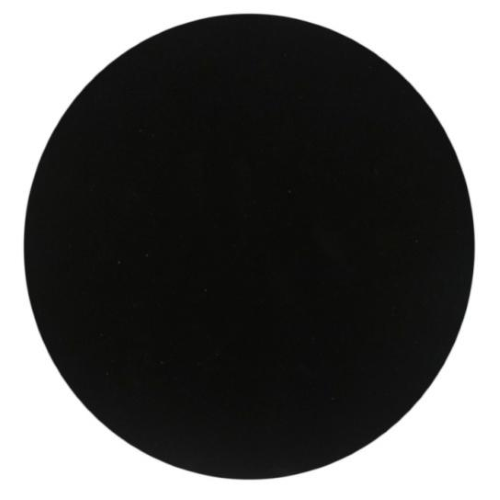
2026-03-11 13:00Black Semiconductor Polishing Pads is a specialized consumable designed for precision polishing of hard and brittle materials. It is suitable for grinding and polishing processes on samples such as crystals, ceramics, metals, and cemented carbide. Its working layer is made of frosted leather material with moderate softness and hardness. This design effectively protects the sample surface from damage while providing a stable foundation for abrasive particle embedding, enabling a high material removal rate for hard and brittle materials.
Why Choose Black Semiconductor Polishing Pads?
For hard and brittle materials like monocrystalline silicon, sapphire, and optical glass, selecting a polishing pad presents a dilemma: if the pad is too soft, abrasives get buried in the fibers, resulting in low cutting efficiency; if the pad is too hard, abrasives can scratch the sample surface arbitrarily, leaving deep marks.
The distinctiveness of Black Semiconductor Polishing Pads lies in finding a middle ground. The treated material feels soft to the touch but offers noticeable support when pressed. This "flexible yet firm" characteristic allows it to conform to the sample surface, distribute pressure evenly to prevent edge chipping caused by localized stress, and provide a stable "foothold" for diamond abrasives, ensuring they actually cut into the material rather than sliding across the surface.
Features of Black Semiconductor Polishing Pads
Protects Surface from Damage
Black Semiconductor Polishing Pads have a fiber structure denser than traditional felt. During polishing, it controls the embedding depth of abrasive particles, preventing them from rolling randomly or digging in deeply, thus effectively reducing the occurrence of random deep scratches. This is particularly important for materials highly sensitive to surface damage layers, such as crystals.
Maintains Wetness
Black Semiconductor Polishing Pads possess fine pores that can absorb a certain amount of polishing fluid. Under centrifugal force, the stored fluid is continuously released into the processing area, ensuring the entire polishing process remains in a wet state. This not only stabilizes processing but also prevents waste of polishing fluid—saving noticeable costs when using expensive abrasives like diamond suspensions.
Self-Adhesive Backing
Black Semiconductor Polishing Pads feature a self-adhesive backing that is water and oil-resistant. Simply peel off the protective film and apply it directly to the polishing platen—no glue needed, no waiting for it to dry. It peels off cleanly during replacement, leaving no sticky residue on the platen surface.
Which Materials is it Suitable For?
Crystal Materials: Quartz, lithium niobate, silicon carbide, etc.
Ceramic Materials: Fine ceramics like alumina, zirconia.
Cemented Carbide: Tungsten carbide, etc.
Metal Alloys: Non-ferrous metals and their alloys.
Installation and Operation Procedure
In practical use, the installation steps are relatively simple:
Clean the polishing platen base, ensuring the surface is dry and free of oil.
Peel off the release liner from the back of the polishing pad.
Align the pad and attach it to the polishing platen, applying even pressure from the center outwards to expel air bubbles.
Apply an appropriate amount of polishing fluid and begin sample polishing.