

High Temperature Tubular Furnace Vs Box Furnace: A Guide For Purchasing Decisions
2026-07-30 14:12Among laboratory heat treatment equipment, tube furnaces and box furnaces are two common furnace types. Many purchasing leaders encounter a question when choosing: Which one is more suitable for their experimental and production needs?
Tube furnaces and box furnaces have their own characteristics. The box furnace is mainly heated in an air environment and is suitable for processing large samples or batch production. The high temperature tubular furnace can control the atmospheric conditions in the furnace, such as introducing inert gas or evacuating, and is suitable for heat treatment of small samples. Which one to choose depends on the specific process requirements.
1. Shape And Structure
The shape of the high temperature tubular furnace is tubular. Its core component is a high-temperature resistant furnace tube, and the space inside the tube is the heating area. Commonly used furnace tube materials include quartz tube and corundum tube. Heating elements are distributed along the axial direction of the furnace tube, and the sample is placed in the furnace tube for heating. This structure allows the heating area to be relatively concentrated. Sealing flanges are equipped at both ends of the furnace tube, which can realize vacuum pumping or introduction of protective gas.
The chamber of a box furnace is square. Heating elements are distributed around the furnace cavity. The sample is directly placed into the furnace cavity, closed the door and started the heating program. The operation is relatively straightforward.
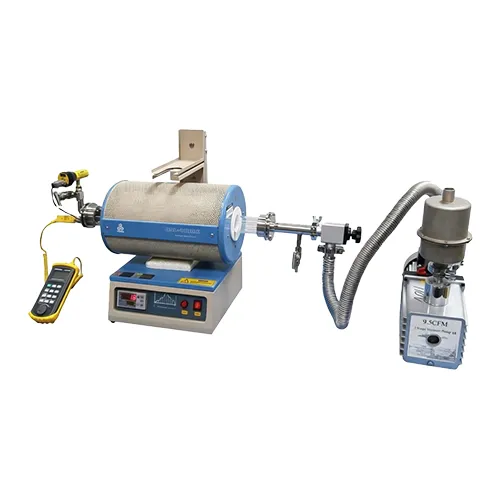
In terms of structural design, tube furnaces from different manufacturers will have some differences. Take Shenyang Kejing's GSL-1100X-50-LVT as an example. This furnace adopts a split structure, and the furnace body and the control system can be separated. The stainless steel shell has a height adjustment function, and the furnace body can be placed horizontally, vertically or tilted according to experimental needs. This design provides more flexibility when handling processes that require specific angles.
Recommendation: If the sample is powder, granules, small size parts or long strips of material, a tube furnace may be more suitable. If the workpiece size is large, or if samples of different shapes are frequently replaced, the box furnace may be more convenient to use.
2. Applicable Process
Tube furnaces are mainly used in heat treatment processes that require atmospheric protection or vacuum environment, including material synthesis, atmospheric sintering, catalyst research, annealing and CVD experiments.
Take Shenyang Kejing's GSL-1100X-50-LVT as an example. This equipment is commonly used in materials research in universities and research institutes, drying and sintering of battery materials, heat treatment of ceramic powders and catalysts, annealing of small metal samples, and research-level vacuum heat treatment.
In actual use, the process adaptability of the tube furnace will vary depending on the specific configuration. The working temperature of the GSL-1100X-50-LVT can reach 1000°C, the maximum temperature is 1100°C, and the recommended heating rate is controlled at about 10°C/min. For processes that require long-term insulation or complex heating and cooling curves, it is equipped with a 50-segment programmable controller. Users can preset the temperature curve and the equipment will automatically execute it. These parameter settings are widely applicable to sintering and annealing processes common in material research.
Chamber furnaces are suitable for batch heating of small parts or large workpieces, such as ashing, melting, annealing, batch firing of ceramics and processing of large workpieces.
Reference suggestions: You can sort out the specific process types before purchasing. If it is continuous production, the same product is processed repeatedly, and atmosphere protection is needed, tube furnaces may be a more suitable choice. If there are many types of processes, the workpiece size is not fixed, and the box furnace may be more versatile.
3. Atmosphere Control
This is an obvious difference between the two furnace types and a key factor that needs to be considered in purchasing decisions.
Because the two ends of the furnace tube can be sealed and has good air tightness, high temperature tubular furnace can realize heating treatment in vacuum or in a specific atmosphere, such as introducing nitrogen, argon or hydrogen. This is important for experiments that need to be prevented from oxidation or need to be completed in specific atmospheres.
The actual effect of atmosphere control depends on the configuration of the vacuum system and sealing components. The standard configuration of the GSL-1100X-50-LVT includes a mechanical vacuum pump, digital vacuum gauge, KF25 vacuum interface and stainless steel sealing flange. After completing the basic installation, users can conduct vacuum heat treatment experiments without the need to purchase additional accessories. The extreme vacuum of this vacuum system can reach a level of 10 ² Torr. If you choose a molecular pump, you can further improve the vacuum. Oil mist filters can reduce the impact of oil mist discharged by vacuum pumps on the laboratory environment.
Box furnaces usually work in an air environment, and the sealing property of the door is relatively limited, making it difficult to achieve accurate atmosphere control.
Recommendation: If the process is sensitive to oxidation or needs to be completed under specific atmospheric conditions, a tube furnace may be a more suitable choice.
4. Heating Uniformity And Temperature Control Accuracy
The heating area of the tube furnace is relatively concentrated and the temperature control accuracy is high. GSL-1100X-50-LVT adopts PID automatic control and is equipped with a 50-segment programmable controller, with a temperature control accuracy of ±1℃. When selecting the Eurotherm controller, the accuracy can reach ±0.1℃.
A design feature of this device is the use of an OMEGA temperature calibrator and a Type K thermocouple. Thermocouples can be installed inside the furnace tube from the left flange, and the real-time temperature at the sample location can be read through the OMEGA thermometer. This design solves a common problem: there may be differences between the temperature displayed by the meter and the actual temperature of the sample. This function can provide a reference for experiments with high requirements for reaction temperature, holding time and sample repeatability. In material research, the real temperature on the sample surface often reflects the actual effect of the process better than the temperature displayed in the furnace.
Box furnaces usually adopt multi-sided heating design, heat is transferred from multiple directions, and the temperature uniformity in the furnace cavity is generally better.
Reference suggestions: If the process has high requirements for temperature uniformity, you can first understand the temperature field distribution data of the box furnace. If atmosphere protection is needed at the same time, the comprehensive applicability of the tube furnace may be more prominent.
5. About Shenyang Kejing
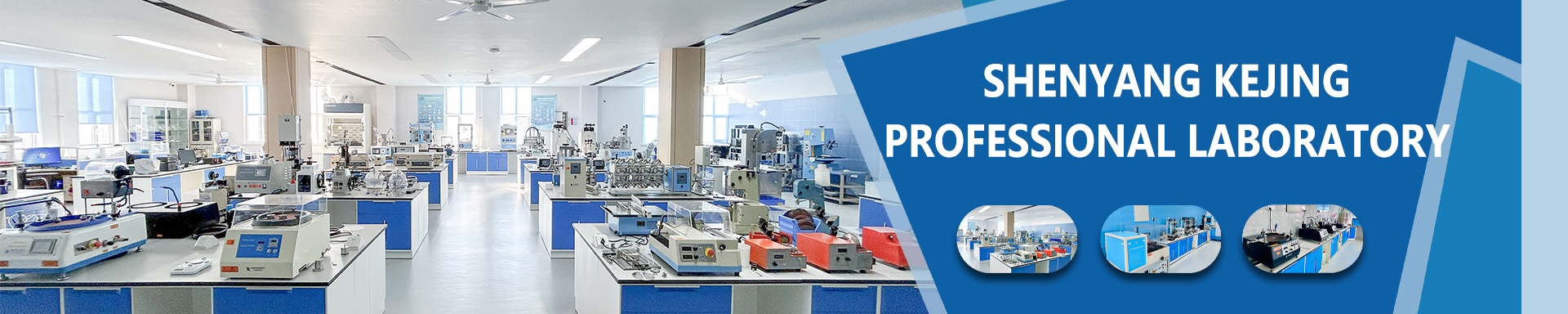
Shenyang Kejing is a company focusing on the research and development and manufacturing of laboratory heat treatment equipment. Its products cover various types such as high temperature tubular furnace, box furnace, and CVD system. The company is located in Shenyang, China, and its products have been exported to overseas markets.
GSL-1100X-50-LVT is a model in Shenyang Kejing tube furnace product line. This equipment has passed CE certification (certificate number M.2021.206.C67996) and complies with relevant international standards. The standard delivery time is 10 working days, and the batch supply capacity is 50 sets. The equipment is provided with one-year warranty and lifelong maintenance services.
If you want to know more technical parameters or need suggestions for specific process selection, please contact Shenyang Kejing's technical team. Our engineers can provide reference solutions based on your actual needs.