


Differences Between Lab Tube Furnaces and Box Furnaces
2026-01-13 17:15In laboratories, research facilities, and industrial settings, high-temperature heating equipment is essential for many heat treatment and materials research processes. The most common types of high-temperature furnaces are laboratory tube furnaces and box furnaces. They differ clearly in structure, heating method, sample suitability, temperature control, and application areas. Understanding these differences makes it easier to choose the right furnace for specific experimental needs.
What Are Tube Furnaces and Box Furnaces?
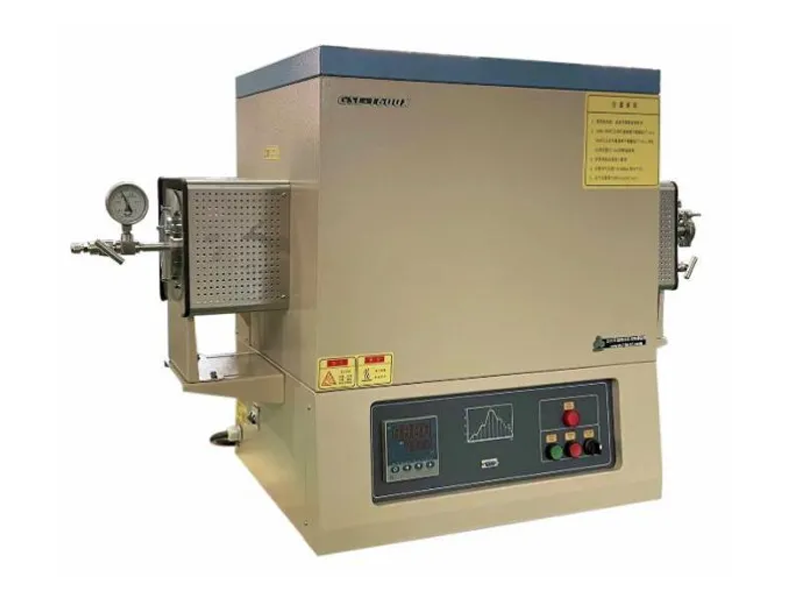
A tube furnace is a high-temperature electric heating device built around a long, cylindrical tube chamber. The heating zone surrounds the tube wall, and samples are placed inside the tube, where they are heated through radiation and convection. A high pressure laboratory vacuum tube furnace is often used in applications that require precise temperature control, controlled atmospheres, or continuous heat treatment, such as material synthesis, vacuum annealing, or atmosphere-controlled experiments.
A box furnace, also known as a muffle furnace, features a square or rectangular chamber. Samples are placed directly inside the chamber for heating. Box furnaces offer larger chamber volumes, simple operation, and flexibility for different sample types. They are well suited for routine high-temperature tasks such as heating large samples, batch heat treatment, and ashing.
Key Differences Between Tube Furnaces and Box Furnaces:
Structure and heating method:
Tube furnaces use a cylindrical tube chamber, with heating elements arranged around the tube, allowing samples to be heated along the tube axis and, if needed, moved continuously under a controlled atmosphere. Box furnaces use a square or rectangular chamber, where samples remain stationary and are heated as a whole, mainly through radiation and convection.
Focus of temperature and atmosphere control:
Thanks to their long, narrow tube design, tube furnaces can more easily achieve highly uniform and precise temperature control and allow better control of the internal atmosphere, such as inert gas or vacuum conditions. A high pressure laboratory vacuum tube furnace is especially suitable for processes that are sensitive to atmosphere. Box furnaces focus more on general high-temperature heating and batch processing rather than precise atmosphere control.
Sample size and suitability:
Tube furnaces typically have smaller tube diameters, making them ideal for slender samples, small parts, or powders, such as nano-powder sintering or heat treatment of rod-shaped samples. Box furnaces provide a much larger chamber space and can handle larger samples or multiple items at once, such as ceramic plates, ashing samples, or batch processing of metal components.
Application focus:
Laboratory tube furnaces are widely used in materials research, catalyst preparation, and process development where precise temperature and atmosphere control are required. Box furnaces, with their simple structure, large capacity, and easy operation, are more commonly used for heat treatment, ashing, annealing, sintering, and general industrial component processing.
Throughput and Efficiency:
Box furnaces can heat multiple samples or larger samples at the same time, offering a higher processing capacity per run. This makes them well suited for batch experiments or batch production.Laboratory tube furnaces usually handle fewer samples at once, but they are ideal for continuous processes or experiments that require more precise control of individual samples, making them better suited for single-sample work or continuous testing.